Saturday, October 13, 2007

A short hike and a few birds

Last Sunday around 2 p.m. I decided to walk to the percolation ponds located about a mile from where I live. These ponds are a small portion of a larger area known as the Los Gatos Creek Trail, a part of the Santa Clara County Park System. As I was walking over the overpass of Hwy 17/Hwy 85 I could look down into the first few ponds and I saw these double-crested cormorants sunning themselves.

Reaching the first three ponds I saw this snowy egret in the middle pond.

As I was watching the snowy egret I noticed a large bird flying around about twenty feet above me. It looked like it was wanting to "land." Well, I guess it was picky where it wanted to land. As you can see from this picture the great blue heron chose to land here next to a snowy egret. What a great opportunity for a photo shoot, comparing the sizes of these beautiful birds. I couldn't imagine these two birds "socializing" with each other. Mmmm. But wait, there's something else in this photo that has me wondering. Take note that the snowy egret's bill is a pale color. Why is that? Is this a juvie? Is that why the bill is a pale color? But all the guides I checked on say the immatures have black bills. I'm really confused on this one.

As I looked across the way on the other side of the trail I saw this great egret. Looks like it just sat there waiting for its picture to be taken.

A little while later the great blue heron decided to move, and flew over to a brushier area, but still close to the pond. Another perfect photo moment. This bird did much the same as the great egret - it seemed to be posing. And it stood there for the longest time, so I was able to get shots of it from various spots. But this was the best shot of all. Isn't this an elegant looking bird, just as elegant looking as the great egret?

In another pond was this Canada goose - all by itself. I guess this bird wanted it that way. But again, I was given another good photo moment. The only problem I had was that this bird was dipping into the shallow water for whatever it is that they eat. So I would have to try and catch this bird in an upright position each time it came up for a breather, which was less than 2 seconds each time. Doesn't that water look serene? And to think there is this noisy freeway about 50 yards to the east of this "serenity."

Off the side of the pond where the Canada goose was I spotted this (I think) ring-billed gull - all by itself. He/she caught a small flat fish and was "playing" with its food. It was fun to just stand there and watch this bird. It would hold the fish in its bill, then drop it, then peck at it (even though it was totally dead), then pick it up and hold it its bill, drop it, and peck at it again, etc. You could say I was being totally entertained by all these "solitary" birds.

I then decided to walk the trail a little further, heading north. And on the trail I came across quite a few scrub oaks. And here is a shot of their fruit. I guess you can say it's fall around here - we have subtle ways of seeing the seasonal changes around here.

As you walk further down the trail it's like you are straddling between the ponds and you are on a higher road where the vegetation is drier, and the water is farther down the hill on each side. There are some power lines crossing over the trail and there are always some birds perched on these wires. Across the way were these double-crested cormorants. I wouldn't believe it if I hadn't seen it for myself. There were at least a dozen cormorants spread out, perched on the wires. Closer to me, just above me, were about the same number of rock pigeons. As I'm standing there taking pix of the cormorants I sensed something else flying around out of the corner of my eye. I stopped to see if I could ID the bird. Well, it finally perched itself in the top of a tree. The tree was about twenty feet ahead of me. I caught a beautiful sight of (I think) a sharp shinned hawk in my binoculars, but when I went for my camera, by the time I focused in on the bird.... Yes, we've all had these stories -- kind of like a fisherman's story of the big one that got away. ;-) Meanwhile, I looked up at the pigeons and told them that one of them will probably be his/her dinner for the evening.

I guess another good sign of fall around here are all the places we find lots of spider webs. I saw this on the trail not far from the power lines. This whole area of vegetation was full of webs. How about that blue sky for a background?

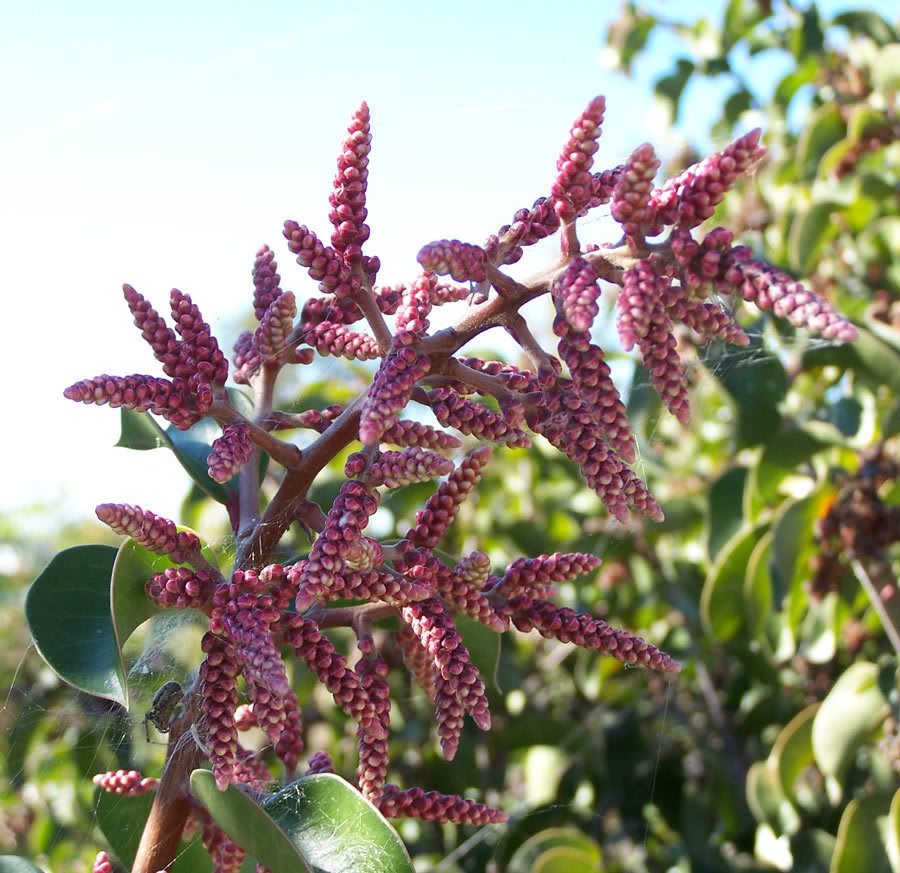
And here is another form of fruit from another plant growing in abundance on the trail. I think it is so attractive, even though it did have quite a bit of webby material around it. Click on it to enlarge to see the webby material.
In addition to the birds mentioned above, I also saw pied-billed grebes, mallards, American coots, killdeer, one black phoebe, several song sparrows, and a few red-wing blackbirds. Overall, I saw a total of 14 species. Not bad for a two-hour walk.

Monday, October 8, 2007

Monterey Bay Birding Festival - Day 2

Saturday (Sep 22) started out as a rainy morning. Actually, it had started raining overnight. I think I woke up around 2 or 3 a.m. and could hear the raindrops softly falling on our roof. Dave got home Friday night in time for us to pick him up at the airport, and then grab a quick bite to eat on our way to our first pre-season Sharks home game at the Tank (aka HP Pavillion of San Jose).

OK, back to birding, namely the Monterey Bay Birding Festival. The drive to Watsonville was rainy, and when we arrived to check in at the Red Roof Inn, it was raining a bit harder. But, sometimes rainy days are good weather for birding - at least that's what I have heard. So I didn't let the rain hamper my thoughts or feelings for the day. I would just deal with it. Oddly enough, the rain we got was the first of the season for us, and everyone was commenting that it was a tad bit early. Usually our rainy season doesn't begin before late November. But, we'll take what we can get in the way of rain, especially since our rainy season last year was less than expected for a normal year.

The first field trip for the day was a 2-hour Beginning Birders field trip that took us to an area called Pajaro Dunes. Most of this area consists of summer beach homes surrounded by a riparian habitat as well as a sandy beach area. When we got started it was still raining, but gradually the rain slowed and then actually stopped. Because of the rain we did not get to see any raptors, but there were plenty of shore birds around. And later, we also saw some passerines. Unfortunately, I was without my camera for the day. I accidentally left it behind; I sure hope I don't do that again. This was a day that turned out so fruitful, and there I was without. Sigh.

Once the 2-hour field trip was over, we headed back to the check-in table to get ready for our second field trip. This second trip ended up being a three-hour plus trip and was well worth it. It was the best of all three trips I was on. This trip took us on the Watsonville Slough area, which included Harkins Slough and part of Struve Slough. Both of these sloughs flow into the larger Watsonville Slough. The weather turned out great, too. And there were many birds to see. And the best of all was that we saw an abundance of raptors.

My list for Saturday:
American white pelican
Brown pelican
Snowy egret
American coot
Black-bellied plover
Heerman's gull
*Violet-green swallow
Chestnut-backed chickadee
Northern mockingbird
California towhee
Song sparrow
White-crowned sparrow
Red-winged blackbird
House finch
Mallard
*Cinnamon teal
Pied-billed grebe
Eared grebe
Double-crested cormorant
Great blue heron
Great egret
Green heron
Turkey vulture
*White-tailed kite
Northern harrier
*Red-shouldered hawk
Red-tailed hawk
*Peregrine falcon
*Snowy plover
*Semipalmated plover
Killdeer
Black-necked stilt
*Greater yellowlegs
*Red-necked phalarope
Mourning dove
Belted kingfisher
Black Phoebe
Loggerhead shrike
Western scrub jay
European starling
Brewer's blackbird

Asterisk = lifer

The biggest highlight of the day was at the end of our trip. There was an abundance of raptors in this one location. It was exciting to see a pair of peregrine falcons, but best of all was watching a white-tailed kite fluttering suspended in air -- much like a hummingbird would do at a feeder.

Saturday, October 6, 2007

Monterey Bay Birding Festival - Day 1

September 21, 22, and 23 was the weekend for the Monterey Bay Birding Festival. My husband and I had signed up for one afternoon trip for Friday, and two trips for Saturday. Unfortunately, unforeseen circumstances arose and Dave was still visiting his Dad in Arizona on Friday. So I went alone to do the Elkhorn Slough (Coastal) birding trip. It's only about an hour's drive from where I live. I met another woman who seemed to also be alone for the afternoon birding trip, and she told me she was waiting for her friend. Her friend lives in the Monterey area, and she is from Palo Alto. Both women graciously asked if I would like to tag along with them since carpooling was encouraged. We all had to meet and check in at the registration table located at the Red Roof Inn in Watsonville. But the birding trip was located a few miles down the road, and at various locations, thus the carpooling situation. It was great tagging along with these two ladies since they were certainly more knowledgable than I. And the woman from Monterey also brought along her scope. The weather was mostly cloudy, and a bit windy at times, but no rain. The Bay Area was expecting rain for the weekend, but we did not experience any on Friday while on the trip.


These photos are various spots where we visited which was all considered a part of the Elkhorn Slough, Coastal area. The birds in this photo (above) are mostly brown pelicans. If you enlarge the photo you might be able to see the elegant terns that are mixed in with the pelicans. In the water are a couple of gulls (sorry, can't ID them), and to the right of the gulls are a couple of dark birds - those are common murres.

This was also one of the areas where the kayaking took place. And the photo above is one of the otters we had seen.

Photo above of brown pelicans flying over part of Elkhorn Slough.

And again, a group shot of brown pelicans more or less trying to sun themselves under partly cloudy skies.


The list of birds that we saw and heard as a group:
Mallards
Eared Grebes
Western Grebes
American white pelicans
Brown pelicans
Double-crested cormorants
Great blue herons
Great egrets
Snowy egrets
Turkey vultures
*White-tailed kite
*Black-bellied plovers
*Snowy plovers
Black-necked stilts
*Marbled godwit
*Sanderling
*Red-necked phalarope
Heermann's gull
Ring-billed gull
California gull
*Elegant terns
Common murres
Belted kingfisher
Black phoebe
*Say's phoebe
*Loggerhead shrike
European starlings
Red-winged blackbirds
Brewer's blackbirds

The ones marked with an asterisk are lifers for me. So many birds, so little time. When it comes to gulls and sandpipers I'm glad someone else was there to ID them. I'm gonna have to study these birds on several more trips so I will be able to ID them on my own.

Thursday, October 4, 2007

A beautiful spider

This is known as a Lynx spider. I found this spider on one of our roses the day before Red and I took off on vacation. This is what it looked like on the 21st of August. Not much to speak of except it had such long legs and such a green body.

This is what the spider looked like when Red and I returned from vacation. This photo was taken on September 3 (Labor Day). What a difference! If you click on this photo to enlarge it you will see this spider is eating a bee. It still has the long green legs, but look at its back. Isn't it beautiful? Well, at least I thought it was beautiful - and considerably larger than the first photo.
Here is another shot of the spider on the same rose when I first found it in August. Notice the webby type of material encasing the rose. As you can see the rose should have fallen off by now, or we should have removed it (deadheaded it), but I pointed out to my husband that he was not to deadhead that particular rose for obvious reasons. Of course, I still did not know what this spider was, and I did not know if it was considered a beneficial "bug" or not. This photo was taken only two days later than the previous one - September 5. Notice the spider seems to look a little bigger in the body than the one taken on Sep 3.

This was taken on September 7. It looks like more webby material encasing the rose.

And here is what I found a week later, September 15. A much thinner looking spider with an egg sac. By now I really wanted to know what kind of spider I was dealing with. So I googled spiders, and found that this may look like a "flower" spider. I continued to search under flower spiders, but it didn't quite look like the photos I saw on the internet. I then found an email address of someone at UC Davis, wrote to her and asked if she could help me ID this spider and let me know if it is beneficial or not. I received an email response the next day and found that it was a Lynx spider. So I then googled "lynx spider" to see what other info I could learn about these critters. Quite fascinating info. I found that they are called lynx because they jump on their prey, much like a cat would do. They eat other bugs as well as bees.

And here is momma spider on September 25, still protecting her egg sac. Notice she moved it from the rose onto a rose leaf. You will also note that the egg sac is no longer as spiky and green as before. It now looks dried out and kinda brownish. I checked on her again today when I came home from work. She still looks the same, and the sac looks the same, too. Another piece of info I learned was that these eggs will take two weeks to hatch, but they stay inside the sac for another two weeks. And momma spider feeds them through the sac until they have their first molt. Then they should emerge. So I guess I have about another week to see if I get the chance to watch the little spiderlings emerge.

Wednesday, September 26, 2007

Mt. Vernon, George Washington's home

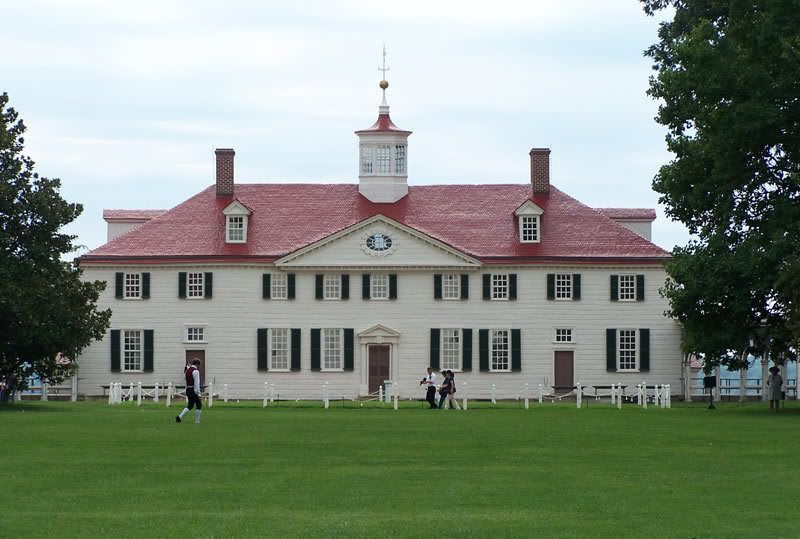
Red and I spent our last day touring Mt. Vernon. Quite a bit of history is involved here. George Washington's great grandfather first owned this land on what is known as the upper Potomac. It was GW's older half brother who changes the name of this homesite to Mt. Vernon. And it was through this brother, named Lawrence, from whom GW acquires this estate. The grounds of this estate are quite expansive and magnificent, and it was all built by George Washington. Here is the view of the front of the mansion from what is known as the bowling green.

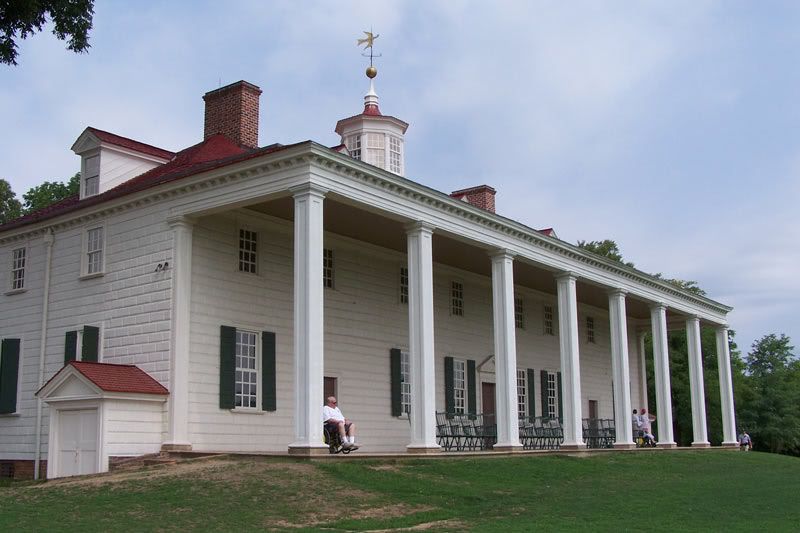
This is the rear view of the mansion.
There was so much to see, but other than a tour of the mansion, Red and I wanted to see the gardens most of all. Here are only a couple shots of some beauty in the gardens.
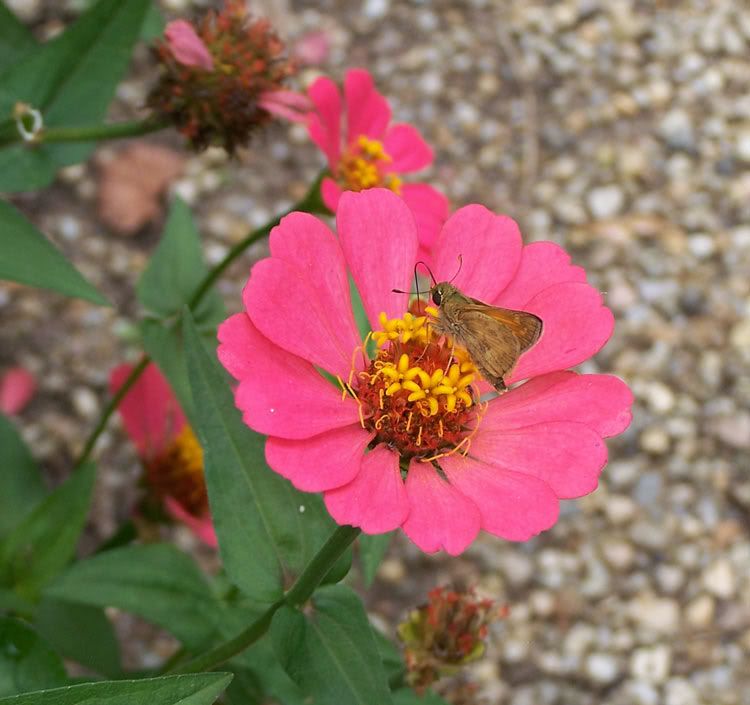
I think this is a skipper sitting on a zinnia.

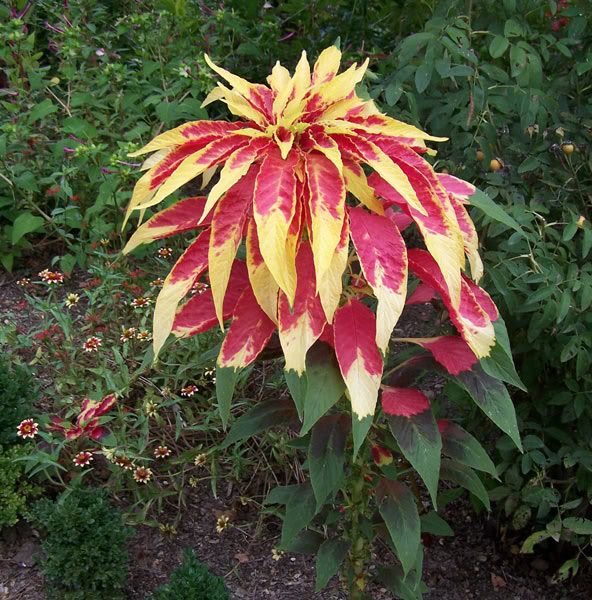
To me this was a most unusual plant. I had never seen one like this before, except it looked similar to a coleus. It is called Joseph's Coat.

And last, but certainly not least -- actually I can say I have saved the best for last.
While touring the gardens I found this little caterpillar on one of the potted nursery plants. Any chance someone can ID the sound of the bird in the background?


Red and I took many more photos, but these are just the highlights. We had to catch a late afternoon flight out of BWI, so we had to allow ourselves enough time to leave Mt. Vernon to get to the airport at a reasonable time. We hated to see our vacation end so soon. Oh well.


Sunday, September 23, 2007

Washington, DC

Our trip to our nation's capital was entirely too short. As a matter of fact, our whole vacation packed in more than we could reasonably see in a week. And a trip to DC just doesn't do the city justice when all you have is just eight hours to hit the highlights. But Red and I did manage to see a few places. Please visit Red's blog to see a few more photos that I haven't posted here.

Our method of transportation was using the Metro; this is the best way to get around in DC and the surrounding areas. So our first stop was the Library of Congress. I visited the Library of Congress for the first time back in 2004 when I traveled there for a combined business and pleasure trip. I was so impressed with this building I just had to sell Red on seeing it, too. The Library of Congress is so ornate, and at one time was considered the "largest, ... costliest, ... and safest library building in the world."

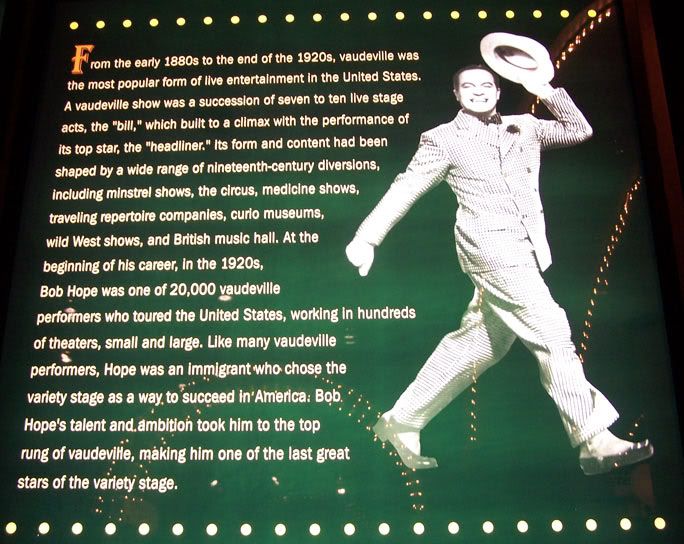
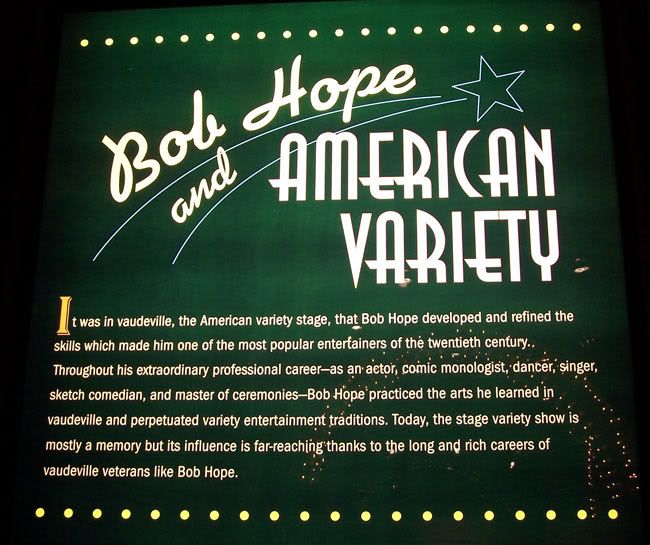
This year's special exhibit featured Bob Hope and American Variety. This room is a gallery usually dedicated to American Entertainment. This year features Bob Hope and all he was known for in the entertainment business, but also included some of his personal life's history. Click on the photos to see larger images.

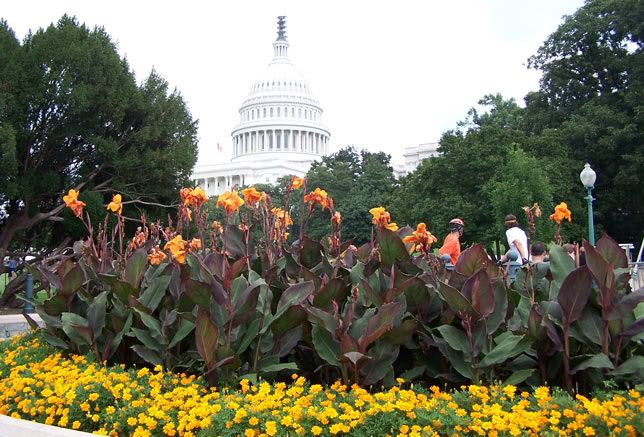
After spending a couple hours in the Library of Congress we wanted to walk by the Capitol and head for the memorials by walking the mall. Here is a photo looking back at the Capitol with some beautiful cannas in the foreground.

While walking past the Capitol and headed for the mall, Red and I saw a building that looked like a giant-sized green house. It was the National Botanic Gardens. Well, there was no way we were going to pass up such an opportunity. We had to see what was there, but little did we know we would spend several hours there and still feel that we only scratched the surface of what was available to see. Many plants and flowers that were outdoors had bees and butterflies all over them. Here is just one shot of a couple bees on some beautiful yellow flowers. Anybody know what these flowers are?
This was a display featuring the gardens of New Mexico, namely the Botanic Gardens located in Albuquerque. Note the chile ristra hanging from the center of the wagon. This is something that is commonly seen hanging outside the front door of many homes in New Mexico.
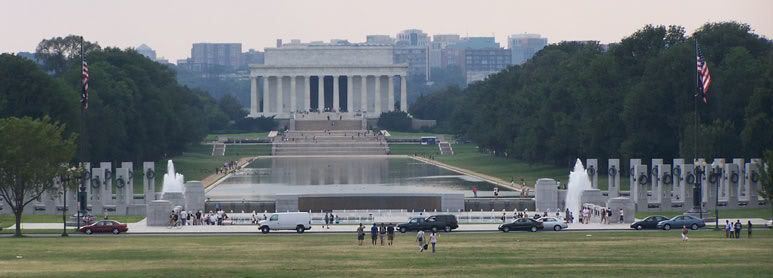
OK - we are finally walking down the mall, headed for the memorials that are located there. But it is getting late and we are getting tired - so we decide to see just the Vietnam Memorial and the World War II Memorial. Here is a view of the WWII Memorial in front of the Lincoln Memorial, taken from the grassy area near the Washington Monument.
While we are walking down the mall toward the memorials, we look off to the side to our right and get a glimpse of the White House. I zoomed in on it and this was the result. This building and the Capitol are two buildings I have not ever visited. Have any of you ever visited either of these buildings?
And here is a view of the Washington Monument taken from the WWII Memorial.

Friday, September 21, 2007

More of Annapolis

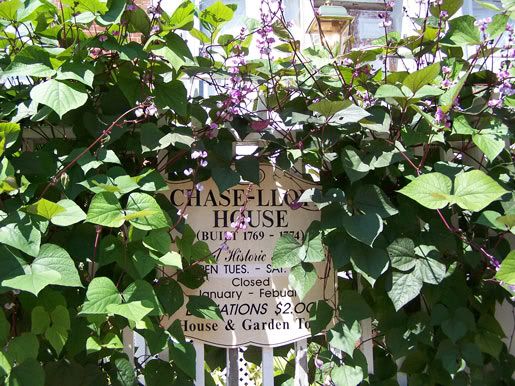
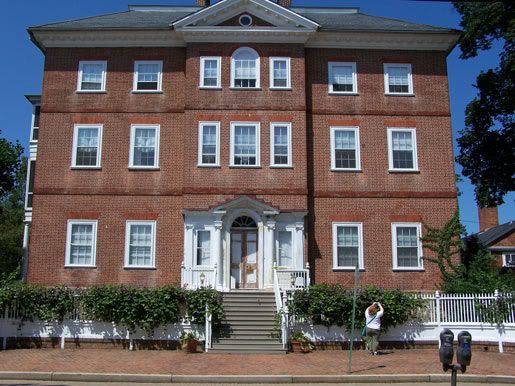
Following the noon meal formation at the Naval Academy, Red and I walked around other parts of Annapolis. Some of the spots that the tour guide pointed out intrigued us enough to give us the desire to return to get some better photos. One of those spots was the Chase-Lloyd house. Here is a link to the history of the house provided by the National Park Service. Apparently, Samuel Chase, one of the signers of the Declaration of Independence, began building this house in 1769. But then he sold it unfinished to "Edward Lloyd IV, a wealthy Maryland planter and politician." Be sure to click on the NPS link - it's quite informative.

Below is a shot of the sign in front of the house. The main reason for taking this photo was to get a shot of the beautiful hyacinth bean plant growing all over the front of the house.

Below, I took this photo when Red was taking a close-up shot of the hyacinth bean plant.
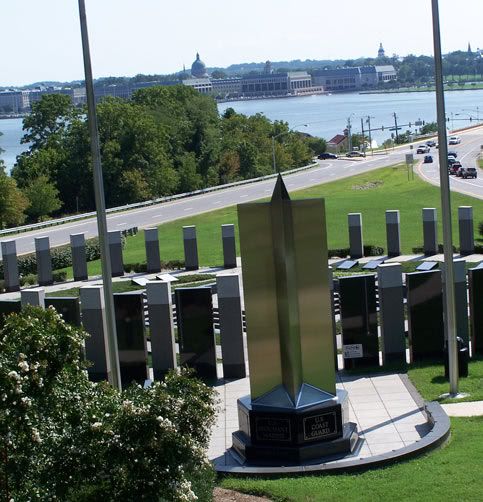
Below is a view of the Naval Academy from the WWII Memorial.

Maryland's WWII Memorial.


Tuesday, September 18, 2007

Naval Academy Chapel

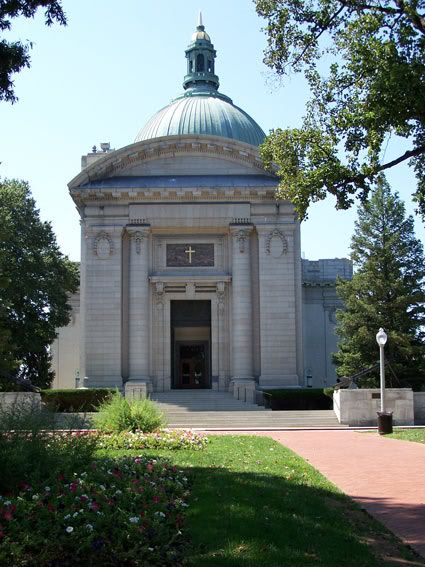
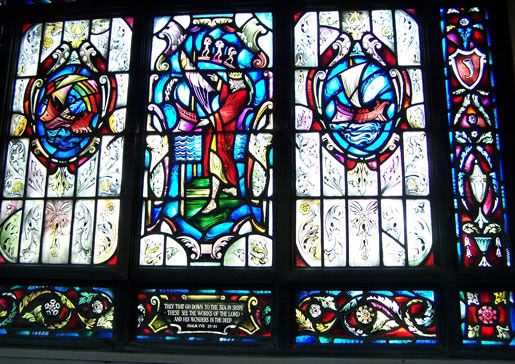
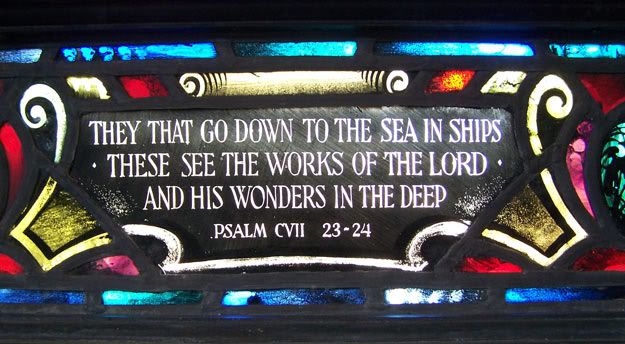
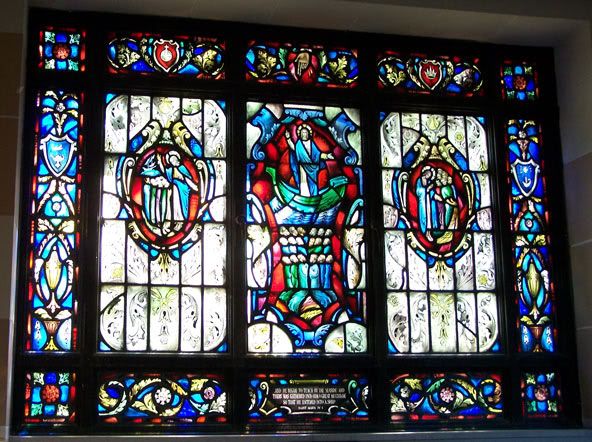
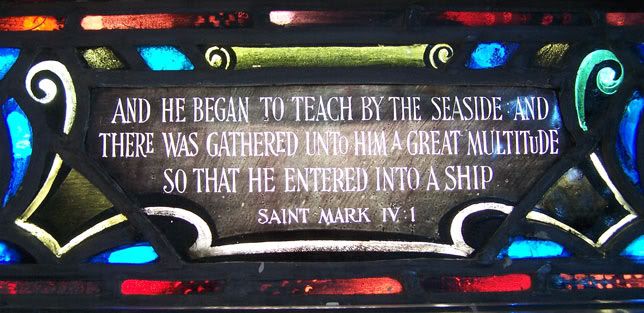
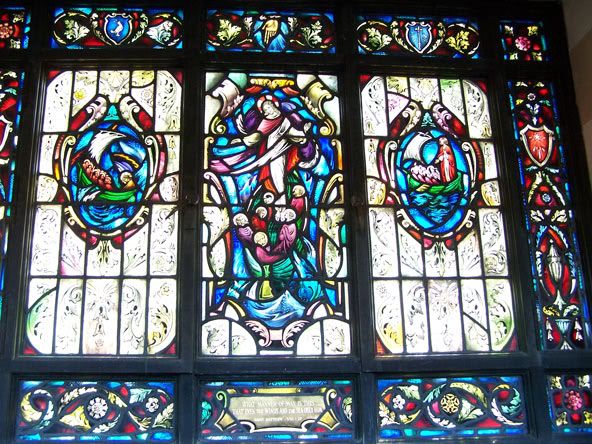
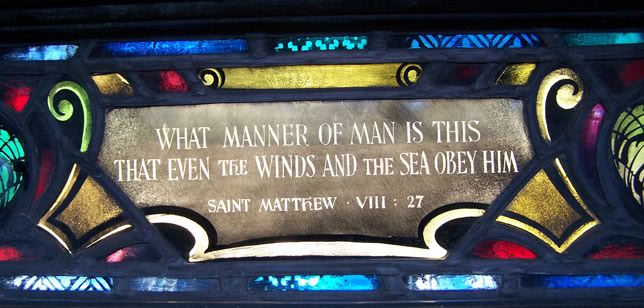
All of the following photos are of the chapel at the Naval Academy.The following are a few of the beautiful stained glass windows. I got close-ups of the Biblical verses that were under each of the windows.


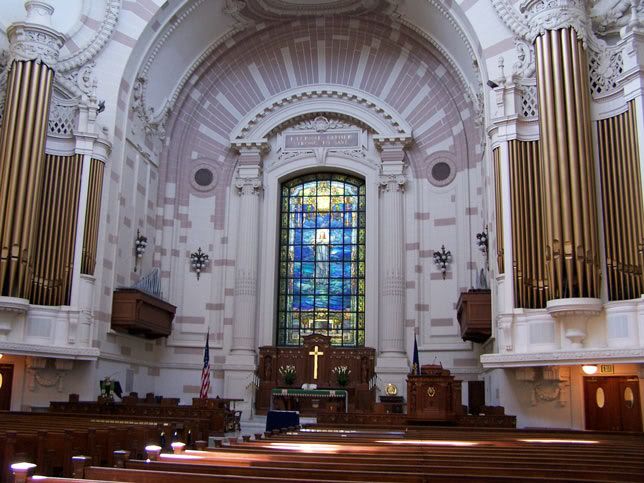
This is the altar area of the chapel, aka the chancel. Take note of the organ pipes on each side.
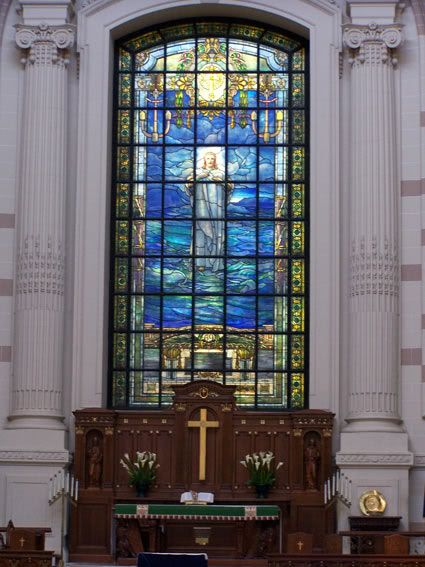
Here is a close up of the stained glass window in the chancel.
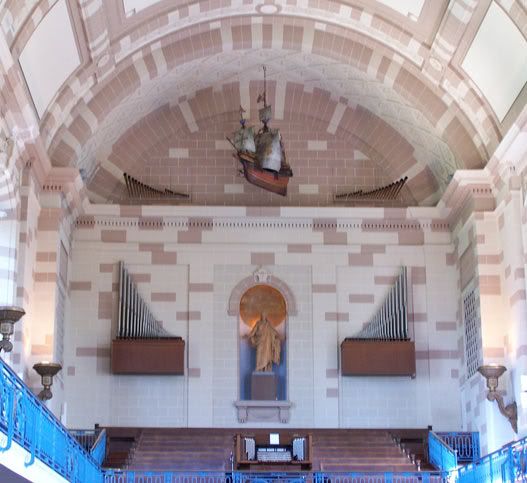
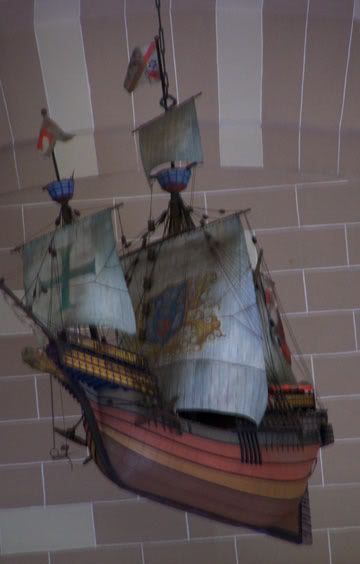
This is the back of the chapel, in the balcony - a view of the organ and more of the pipes. Also note the ship hanging - it is called the votive.
The history behind this votive: it is a model of a 15th century Flemish carrack. It is to serve as a reminder that God protects those in peril from the sea.

Be sure to stop by Red's post. She has a few more pix, some different from mine, that you will probably enjoy, too.

Friday, September 14, 2007

US Naval Academy, Annapolis, MD


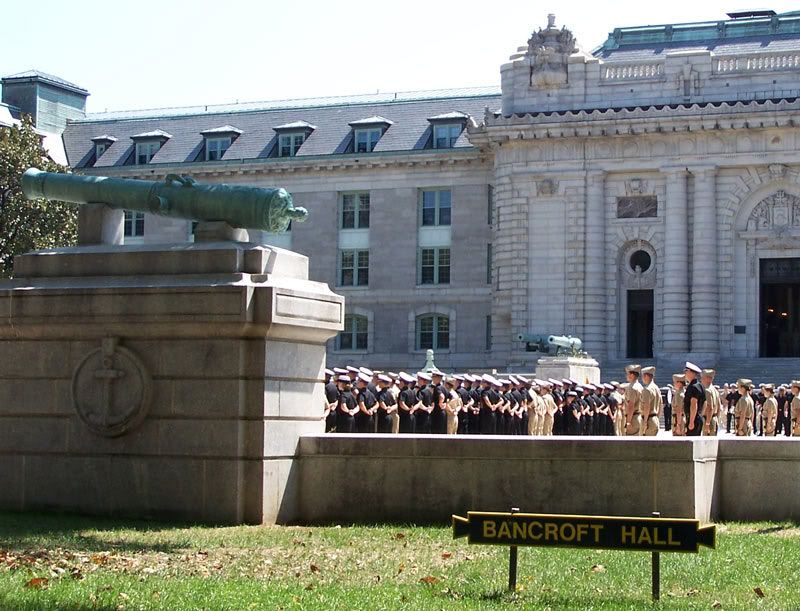
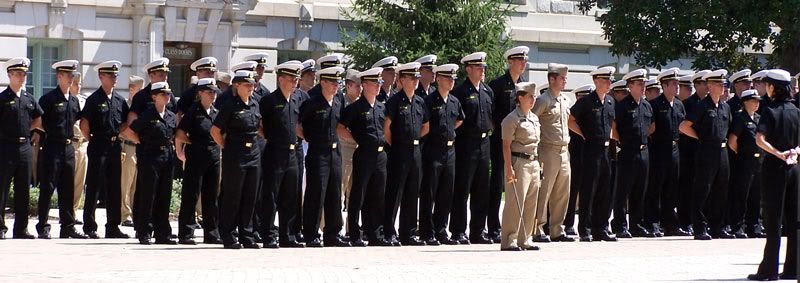
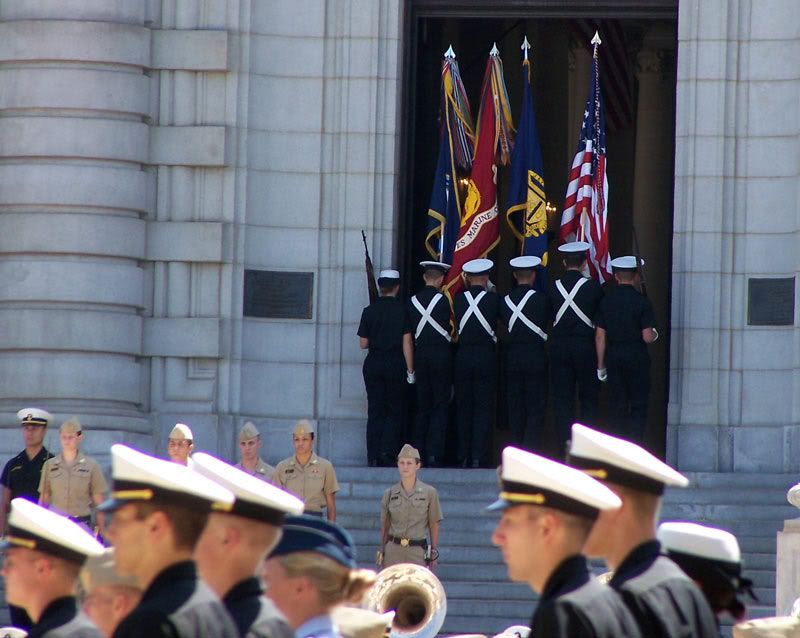
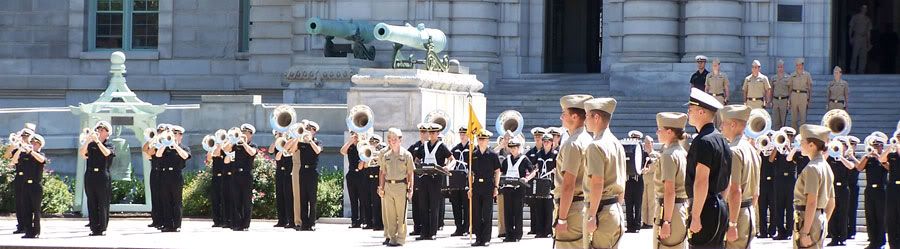
Our walking tour ended at the US Naval Academy at noon, when all midshipmen participate in what is known as "formations." You should be able to see larger views of each of these photos by clicking on them. As you can see "formations" takes place in front of Bancroft Hall.

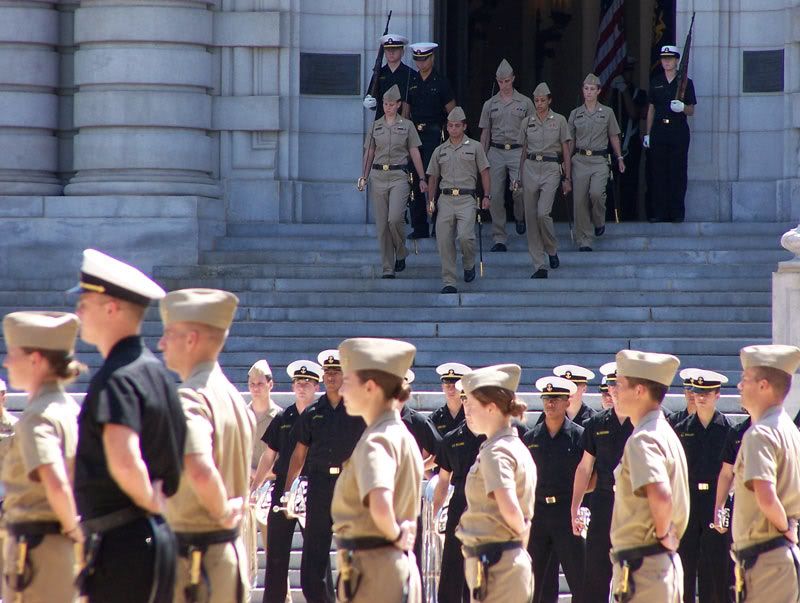
Here you can see the color guard coming from Bancroft Hall...


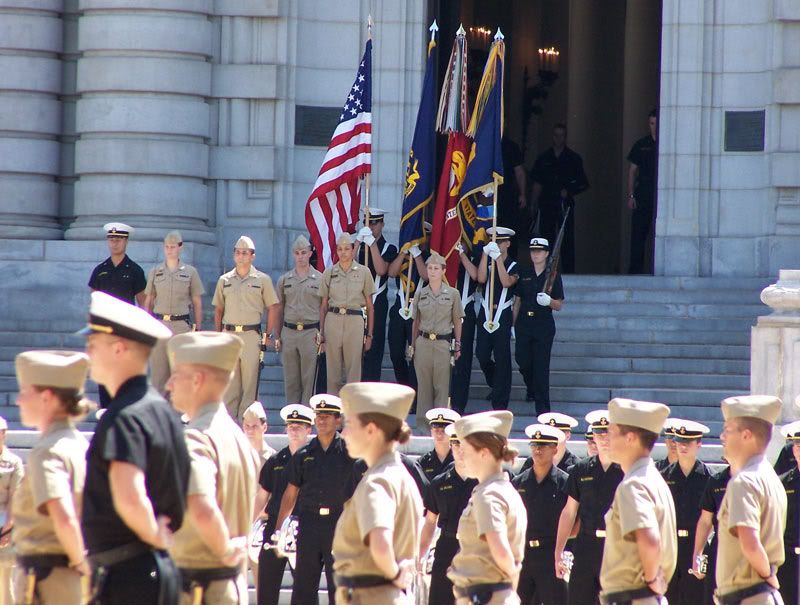
...presenting the colors...


...and colors recessing.


Naval Academy brass. You can visit Red's blog to see a video of formations, and you will hear a few of the tunes they played.

All recessing into Bancroft Hall.


Current skin is MC Winter 08 and designed by Red.
Best viewed on Firefox at 1024x768, larger or widescreen.